
Connect Email to Your Inbound Content and Sales Process
Email helps an inbound strategy when it carries a reader from a useful first resource to the next decision they are ready to make. Connect the content, subscription promise and response process before adding more automated messages. A growing audience is only useful if the program keeps helping that audience and routes real requests to someone who can respond.
This guide is for teams that already have some content and an email audience. For the initial setup, use inbound email basics. The examples are illustrative; sources were checked on September 23, 2026.
Map the questions before mapping the sequence
List the decisions a prospective customer makes before buying. A company considering outsourced bookkeeping might first ask which tasks to keep internally, then how to compare providers, then what an onboarding process requires. Those questions form a more useful sequence than a fixed series of promotional messages about your company.
Review existing content against that journey. You may have several introductory articles but no explanation of the handoff, or detailed service pages without a useful way for an early-stage reader to continue learning. Identify the missing answer before commissioning another broad article.
Talk to the people handling enquiries. Ask which questions delay a decision, which expectations are commonly wrong and which information makes a consultation productive. Use their observations as inputs, then check them against actual records where available. Do not treat one salesperson's memorable conversation as a measured market trend.
Give each resource a clear reader and task. A checklist for preparing financial records serves a different need from a pricing explanation. Email can connect the two when the reader's question advances, but it should not assume that downloading the checklist means an immediate desire for a sales call.
Make the subscription promise fit the entry point
A reader entering through a practical guide expects related help. Tell them what the follow-up will cover and how often they will hear from you. A generic invitation to join “our community” makes the program harder to evaluate and gives the content team little direction.
Keep resource delivery and broader promotional preferences distinguishable. Someone may request a single document or subscribe to a continuing series. Preserve that choice in the record. The opt-in guide explains how clear wording and reliable subscription records support the rest of the process.
Use the entry resource as context, not a permanent label. A person who first reads about bookkeeping software may later need an outsourced service. Give them ways to choose new topics or ask a question. A rigid sequence that continues repeating introductory material can become irrelevant even when the original signup was appropriate.
Do not import unrelated prospecting contacts into the inbound journey. If a team uses business directories to research potential customers, maintain that work separately from subscriber communications. The audience's starting relationship affects both the message and the rules of the sending platform.
Design a progression with useful exits
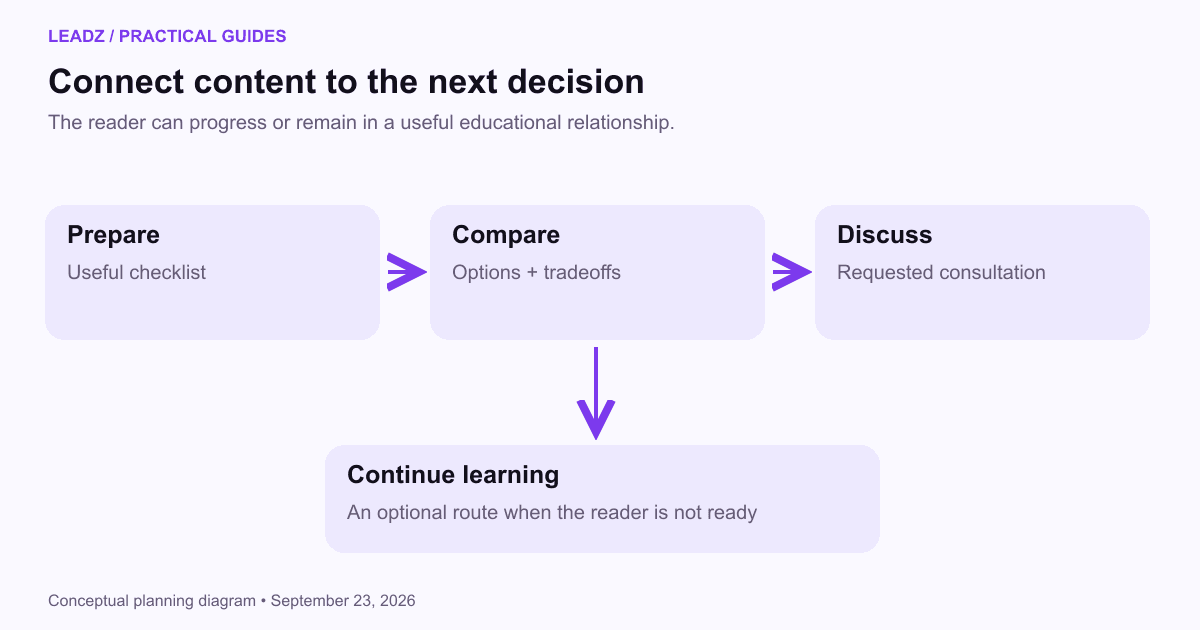
For the illustrative bookkeeping service, the first message delivers a record-preparation checklist. A second explains what information different service arrangements require. A later comparison guide helps the reader decide whether internal work, software support or outsourcing fits the business. A consultation invitation belongs where it helps resolve an actual decision.
Make each message understandable on its own. Readers may miss an earlier message or return after several weeks. Brief context and a clear resource link are more useful than requiring them to remember a numbered lesson. Avoid artificial cliffhangers that withhold the practical answer merely to create another send.
Offer a useful route for people who are not ready to speak. They might choose occasional updates or a different topic. An educational sequence can end without classifying the reader as lost. The business may become relevant later, and maintaining a clear relationship is preferable to manufacturing urgency.
Define stopping conditions. A sales conversation, a purchase, an unsubscribe or a request for different content can change the route. Coordinate those events across systems so a new customer does not receive an introductory sales pitch that ignores the agreement they just signed.
Agree when a human takes over
For the bookkeeping example, a useful handoff might read: “Reader requested the record-preparation checklist, then asked whether we support two related companies. They want to understand onboarding before the next quarter. Operations should confirm the service scope before sales offers a consultation.” The note preserves the actual question and avoids claiming that the reader is ready to sign a contract.
The accounting-practice email guide applies this handoff to client education and explains why a public newsletter needs a separate route from requests for private financial records.
Return the outcome to the content owner after the conversation. If the service cannot support related-company reporting, the relevant page may need a clearer scope statement. If the question is common and the service does support it, a short explanation could help future readers prepare. This feedback connects sales learning to useful content without exposing the person's private business details in the published article.
Write down which actions require a person. A reply asking about suitability, a request for pricing or a completed consultation form should create an assigned task. A click on an introductory article usually does not require a salesperson to call. Match the response to what the reader actually did.
Set expectations on the request page and in the confirmation message. Explain what the team needs to prepare and when the reader can expect a response that the business can reliably provide. Avoid promising an instant consultation if the service depends on a person reviewing the information.
Use shared stage definitions. HubSpot's lifecycle documentation shows one way systems distinguish contacts as relationships progress. Your team still needs to define the evidence for each stage. A marketing system changing a label does not establish that sales has accepted an opportunity.
Pass useful context, not an overwhelming activity history. The receiving colleague needs the reader's question, relevant resource, stated business situation and requested next step. A list of every open event can distract from the actual request and may encourage unsupported assumptions about interest.
Measure the connection between content and enquiries
Give links consistent campaign labels so visits can be traced where reporting permits. Google's campaign URL guidance explains source, medium and campaign parameters. Agree a small naming convention before several people create links with incompatible labels.
Keep original entry and recent influence separate. A reader may discover you through search, subscribe to a checklist and request help after an email. Reporting only the last email loses the role of discovery. Crediting every touch with the whole sale overstates the combined result. Choose an attribution view and explain it.
In an illustrative monthly cohort, 200 people subscribe through a guide, 80 visit a comparison resource and 12 request a consultation. Of those requests, eight fit the service. Guide-to-request share is 6%; request suitability is about 66.7%. These measures answer different questions and should not be collapsed into one “lead conversion” number.
Some decisions will take longer than a month. Record the observation cutoff and review the cohort again later. The campaign metrics guide shows how to avoid mixing new subscribers in the denominator with older enquiries in the numerator.
Diagnose gaps across the whole journey
If many people request the resource but few use it, inspect delivery, file access and the promise on the signup page. The problem may be a broken link or a resource that does not match its description. Sending more reminders before checking those basics can worsen the experience.
If readers use the resource but never request help, ask whether the resource serves an audience likely to need the service. It may be attracting students, job seekers or very small organizations outside your operating model. That does not make the content worthless, but its role in the strategy should be stated honestly.
If suitable readers enquire but fail to progress, review the human handoff. Slow responses, unclear preparation and unexpected service scope can interrupt the journey after marketing has done its part. Read the actual conversations before revising every email template.
Use A/B testing for a specific question once the journey is functioning. A test of two consultation invitations cannot produce a useful comparison if the form is unreliable or the team handles the two groups differently. Operational consistency comes first.
Give the program a maintenance rhythm
Maintain an inventory of active entry points, resources and sequences. Record the audience promise, owner and last substantive review. This helps the team retire obsolete material and identify which emails need attention when a service changes.
Review replies regularly for recurring questions. A useful new article often starts with a question the existing sequence did not answer. Turn that question into a resource, link it where it helps and check whether later conversations become clearer. Content development then follows reader needs rather than an arbitrary publishing quota.
Audit a complete journey periodically using a fresh test subscription. Follow the links, change a preference, submit an enquiry and unsubscribe. Website redesigns and integration changes can break an established sequence without changing the email copy itself.
At the next planning meeting, choose one weak transition to improve. It might be explaining the comparison criteria, making the consultation scope clearer or ensuring a reply reaches the right owner. Email contributes most when it connects useful work already happening across the business and makes the next decision easier for the reader.