
Hiring an Interior Designer for a Business Space
Hire an interior designer when your business needs a space planned around how people use it, with coordinated choices about layout, materials, furniture and the experience you want to create. Define the scope before comparing portfolios. Some appointments cover advice and selections; others include detailed documentation, procurement or installation coordination.
The advantages are most useful when the service fits your project. This guide explains how to make that fit explicit, including the cost and control questions that can make owners hesitate.
Decide which problems the designer should solve
Begin with the business activity rather than a style reference. A reception area may need clearer wayfinding, a café may need a better queue, and an office may need quieter meetings. List the tasks that currently work poorly and the change you want to observe after the project.
Walk the space with the people who use it. Ask where they wait, carry supplies, store belongings and struggle to find what they need. Include cleaning and maintenance staff where relevant. Their observations can reveal practical requirements that do not appear in a mood board.
Then describe the desired character of the space. Bring a few references and explain what you like about each: warmth, visibility, a particular material or the way furniture supports conversation. A picture without an explanation can lead two people toward different interpretations.
Separate essential requirements from preferences. A reception desk may need a defined storage function and appropriate access, while its finish may be open to options. Ask the designer to test those requirements with the relevant professionals rather than assuming a preferred product will solve them.
If the work changes the building more substantially, discuss the role of an architect and other specialists. The architect hiring guide helps distinguish the wider design appointment from a narrower interiors commission.
Understand the service before accepting the fee
Request a list of deliverables for each phase. Concept work, layout development, specifications, procurement and site involvement are different services. Ask what form the output takes and how many review rounds are included. A concept presentation can be valuable, but it is not automatically a package that a contractor can build from.
Clarify who measures the space and checks existing conditions. If the designer relies on drawings supplied by you, ask what verification is needed before ordering fitted items. The cost of a measurement error may be much larger than the time needed to resolve an uncertainty early.
Interior-design regulation varies by jurisdiction. CIDQ's jurisdiction guidance explains that local rules differ. Confirm the requirements for the project's location, title and work scope with the relevant authority. A qualification or membership should not be treated as blanket permission to perform every design task.
Ask where the designer's responsibility ends and another professional's begins. Structural changes, building services and approval submissions may require separate appointments. Put those interfaces in writing so a missing responsibility does not emerge after you have approved the concept.
The proposal should make exclusions easy to find. You can then decide whether to add the service, appoint another provider or reduce the project. That is a better conversation than discovering that your expected support was never included.
Compare the benefits with the demands on your business
A designer can organize choices, explain trade-offs and produce a more coherent specification. That may save owner time, but you still need to make decisions and supply information. A project can stall when the business assumes the designer can infer priorities that its own managers have not agreed.
Set an internal decision-maker and a review process. Collect staff feedback before the meeting, resolve contradictions and provide one response. Ask the designer to show how the revised proposal addresses the brief so comments stay focused on the business goal.
Consider the potential disadvantages openly. The fee adds to the project budget; a broad scope may exceed what a simple refresh needs; and frequent changes can extend the work. A designer with a strong signature style may be a poor fit if you need a very different atmosphere or a tightly constrained procurement plan.
Potential benefit | Owner question |
|---|---|
More coherent selections | How will options be tested against the brief? |
Less purchasing coordination | Which procurement tasks are actually included? |
Better use of space | How will staff and customer activity be evaluated? |
Access to suppliers | How are prices, margins and alternatives disclosed? |
Support during installation | Who attends, checks and records outstanding items? |
Choose the amount of service that the project needs. A focused consultation may suit a small furniture change; a complex commercial fit-out may justify a coordinated team and detailed documentation.
Make purchasing and fee arrangements transparent
Ask how the designer is paid: fixed phase fees, hourly work, purchasing charges or another stated arrangement. Discuss what triggers additional fees and how they are approved. Compare the same deliverables rather than treating two different service packages as competing hourly rates.
If the designer purchases products, establish who is the buyer of record, who pays suppliers and how trade pricing or markups are handled. A trade discount does not necessarily become an owner saving. The useful number is the total agreed cost for the product and service, with the responsibilities clear.
Include delivery, storage, installation and disposal in the purchasing discussion. Ask who handles damage, missing items, substitutions and returns. Custom goods can create different risks from standard stocked products, so confirm terms before approving an order.
For an illustrative budget, suppose furniture is $30,000, delivery and installation are $4,000, design fees are $6,000 and the owner reserves $5,000 for identified uncertainty. The planned total is $45,000. These are invented inputs, not typical prices. A $2,000 saving on furniture is less useful if an excluded installation charge is $3,000.
The construction-company comparison guide applies the same scope-normalization principle to building work. Keep the furniture and construction budgets connected when one depends on the other.
Use an approval trail from concept to installation
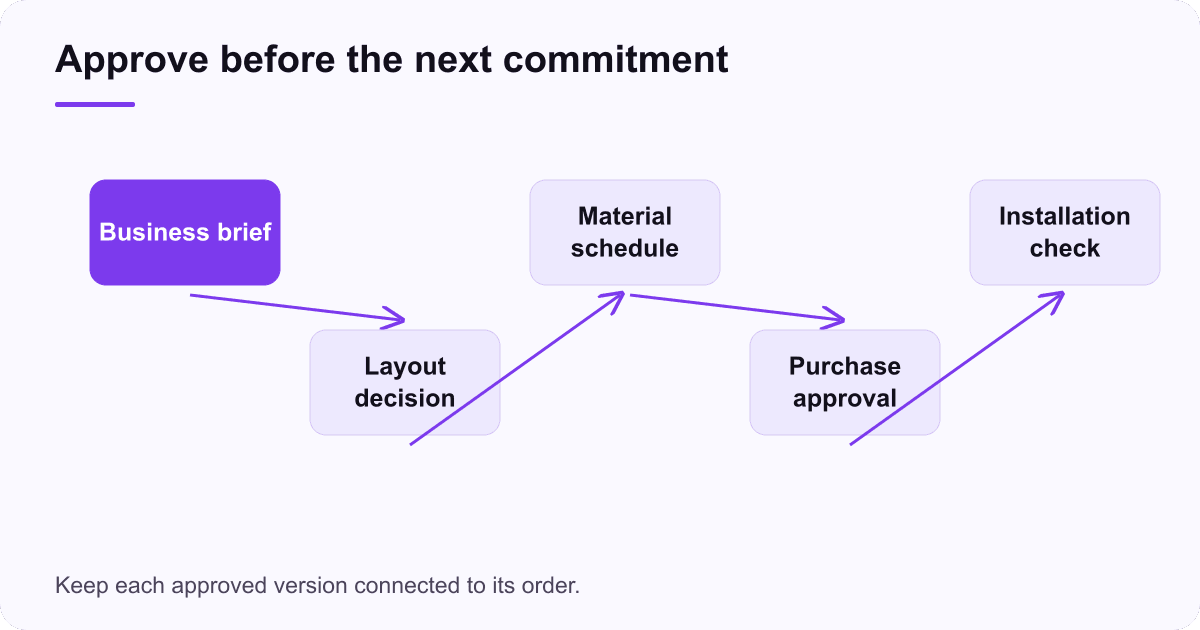
Approve the main layout before committing to products that depend on it. Review samples and specifications in the context of the actual space where practical. A finish shown on a screen may read differently under the building's lighting or beside existing materials.
Ask the designer to maintain a selection schedule. It should identify the item, supplier, specification, quantity, location, approval status and any relevant lead time. Version control matters: a product name in an old email should not compete with the current approved schedule.
Confirm who checks compatibility and dimensions before ordering. For fitted elements, the responsible professional or installer should verify the relevant site conditions. The owner should know when a decision becomes a purchase commitment and what changes would cost afterward.
Plan substitutions. If an approved item becomes unavailable, compare the replacement against the original function, dimensions, finish and cost. Do not let a similar photograph stand in for a proper review. Record the owner approval and any effect on adjacent items.
At installation, use a room-by-room checklist. Note missing, damaged or incorrect items and assign responsibility for resolution. A clear record helps the designer, supplier and installer solve the issue without relying on differing memories of a walkthrough.
Select a designer whose process fits your team
Shortlist candidates with experience in your type of environment and level of project complexity. A residential portfolio may show excellent taste but provide limited evidence about commercial circulation, procurement or phased occupancy. Ask how the practice approaches the specific demands of your space.
Meet the person who will lead the appointment. Discuss how they present options, respond to budget limits and handle disagreement. A working relationship benefits from clear explanations, especially when a preferred visual idea conflicts with a practical requirement.
Request references and ask about the process. Were decisions recorded? Were purchasing terms clear? What happened when an item arrived late or the owner changed direction? How much time did the client need to contribute? These answers help you plan your own involvement.
Use an interior-design business directory as one way to discover practices, then investigate them individually. Listing data does not establish current availability, credentials, insurance or fit.
If the design involves lighting, power or equipment connections, use the electrical-contractor project guide to clarify who will assess and deliver that work. Ask the designer how the specialist appointment fits the project rather than assuming every technical service is included in the interiors fee.
Prepare the first meeting so it produces a decision
Bring the floor information you have, photographs, a brief description of the business, the constraints and a realistic explanation of your budget. Identify what remains uncertain. If the lease or construction scope is still being negotiated, say so before the designer spends time developing assumptions around it.
Ask the designer to recommend the first phase and explain the decision it enables. It might establish a layout, test a concept or define a fuller scope. Request the output, fee basis, review meetings and information you must provide.
Before appointment, confirm responsibilities for specialists, purchasing and site involvement. Check the agreement against the discussions that shaped your choice. Preserve any clarification about revisions, travel, supplier payments or installation support with the final documents.
A successful interior-design appointment gives the business more than an attractive set of images. It creates a usable specification and a sequence of decisions that your team can manage. Start with the operational problem, choose the right amount of service and keep approvals visible through purchasing and handover.